How to Convert User Mailbox to Shared Mailbox & Back in Microsoft 365


Overview: In this article, we are providing an easy solution to convert user mailbox to shared mailbox & shared mailbox to user mailbox in Microsft 365. Just go through this write-up and get a fruitful solution for the same.
What’s the Scenario?
Suppose an employee has resigned or quit the organization. Now, you are an administrator who has to convert that user’s mailbox into a shared mailbox to free up the mailbox license but, you also need to the make the mailbox information available. How will you do this?
In order to do so, you need to convert user mailbox to shared mailbox and all the existing emails and calendars will be retained after this. Now, this shared mailbox can be accessed by multiple members, and later you can convert Shared Mailbox to User Mailbox.
Recommendation: To know about shared mailbox & steps to create shared mailbox in Microsoft 365.
Table of Contents:
Important Considerations
Steps to Convert User Mailbox to Shared Mailbox
1: Sign in to your Microsoft 365 admin account and navigate to the Microsoft 365 admin center.
2: In the admin center, click on Admin Centers >> Exchange.
3: Select Recipients and click on Mailboxes.
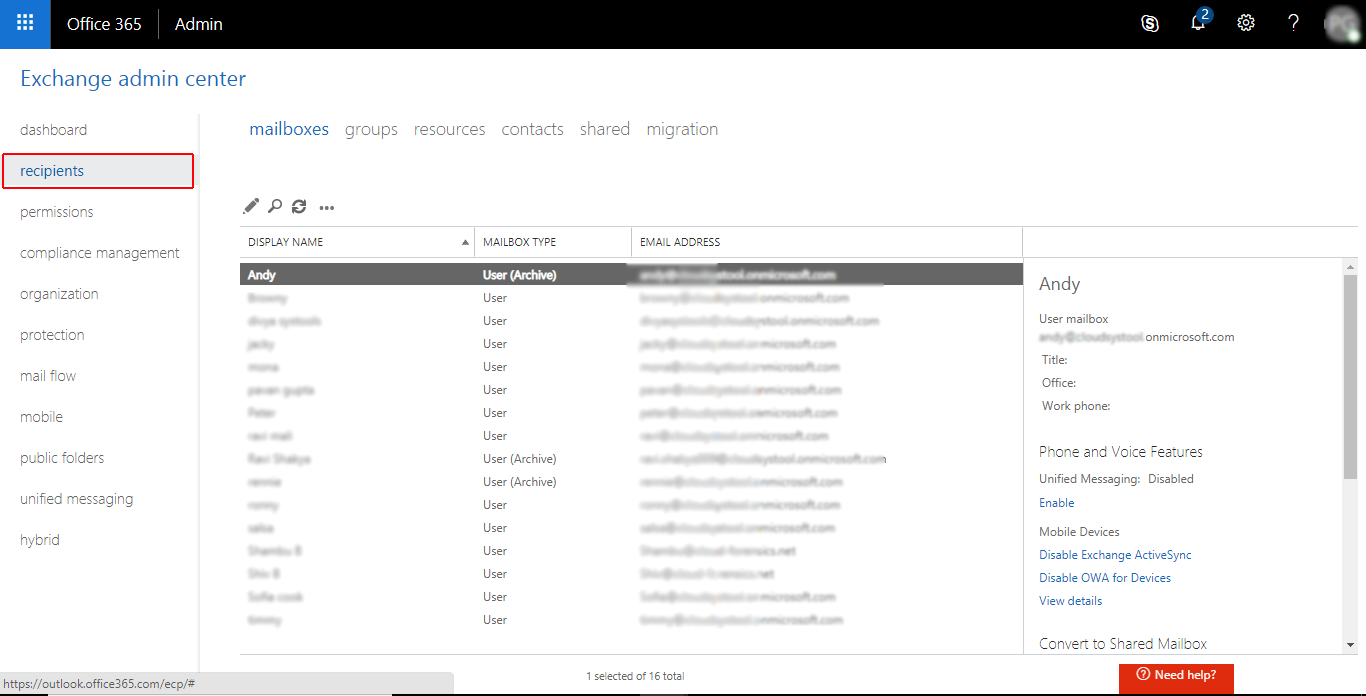
4: Highlight the User mailbox and click on Convert from Convert to Shared Mailbox
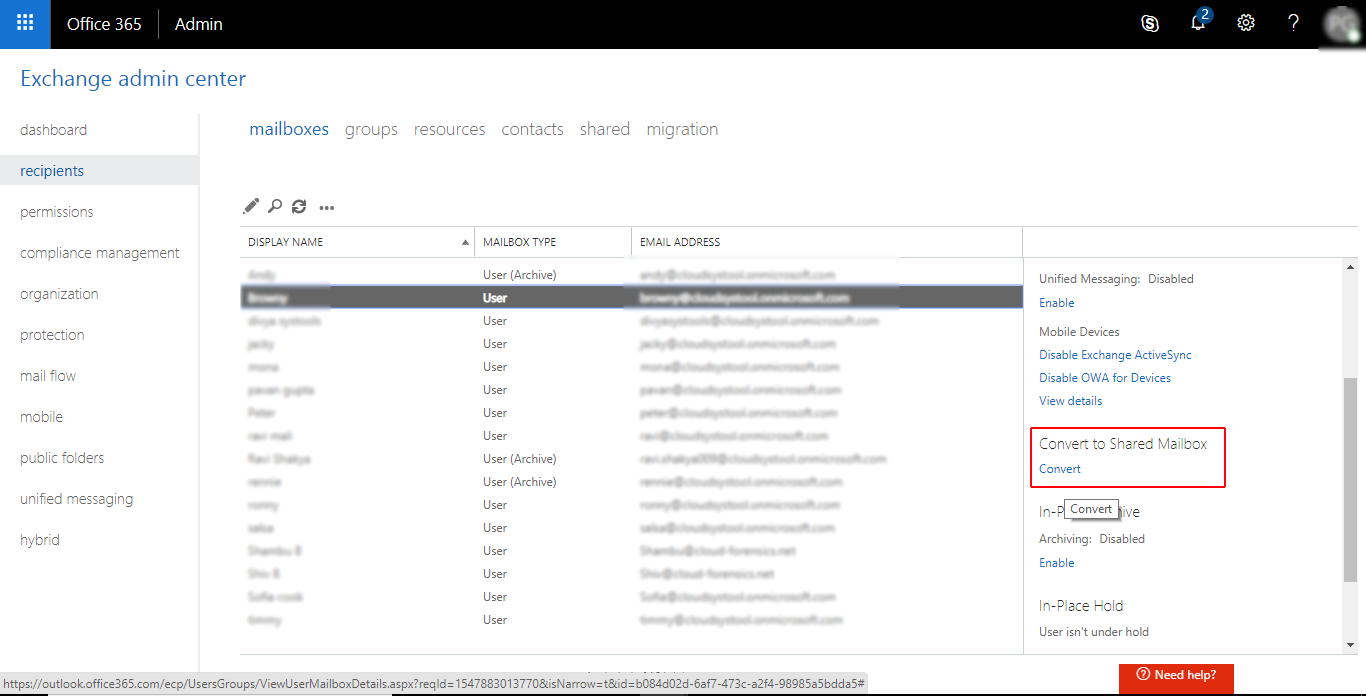
5: In case if the mailbox size is less than 50 GB then, you can delete the license from the user mailbox to eliminate the subscription charge.
But, do not delete the old user mailbox as the shared mailbox needs it as an anchor. A user cannot sign in with the old account
6: If you are a global admin then, you can use PowerShell to convert a user mailbox to a shared mailbox on-premises. For this, execute the following command:set mailbox - type shared
Steps to Convert User Mailbox to Shared Mailbox of a Deleted User
If you have deleted the user account but, you need to convert the old mailbox to a shared mailbox then, follow the steps given below:
Step 1. Restore the User Account in Microsoft 365
Restoring a user account within 30 days after deletion will restore the account along with the entire data.
A user can sign in with the same account. But, make sure there are Microsoft 365 licenses available that you can assign to your account and you must have admin permissions to do so.
1: Go to the Microsoft 365 admin center.
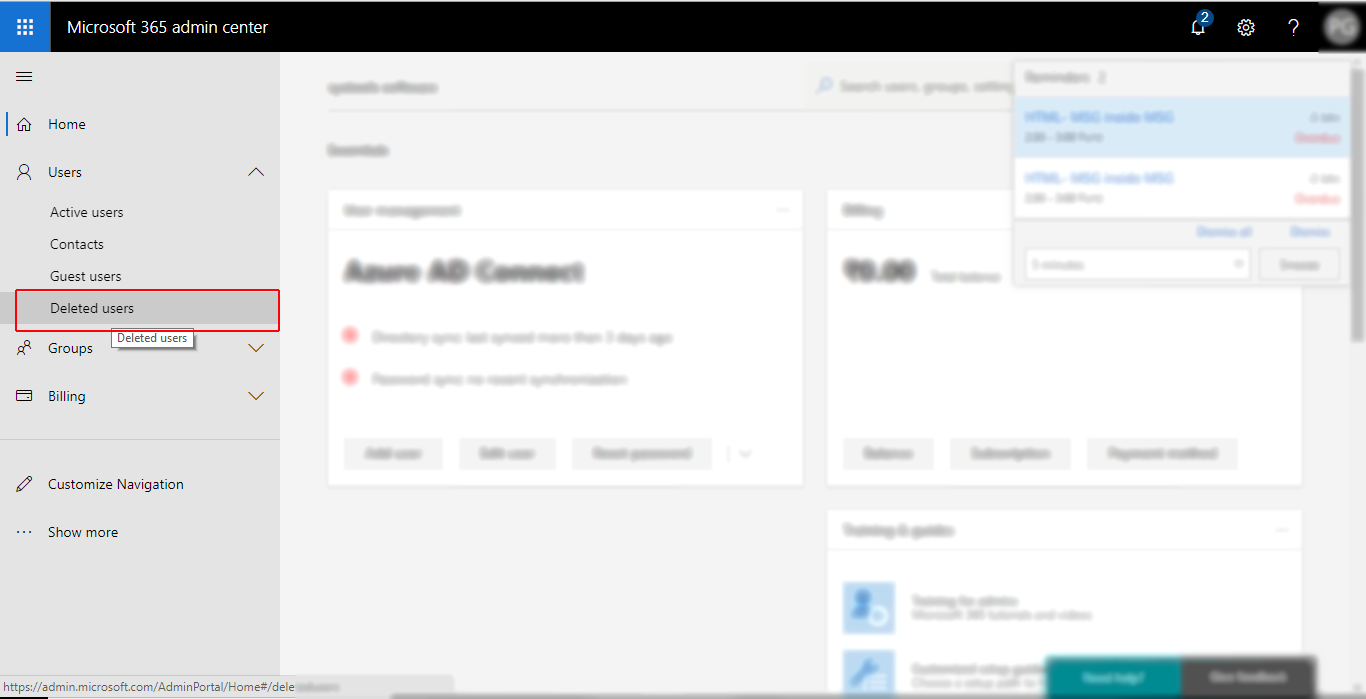
2: In the Admin center, click Users >> Deleted Users.
3: From Deleted Users list, select the one you want to restore and click Restore
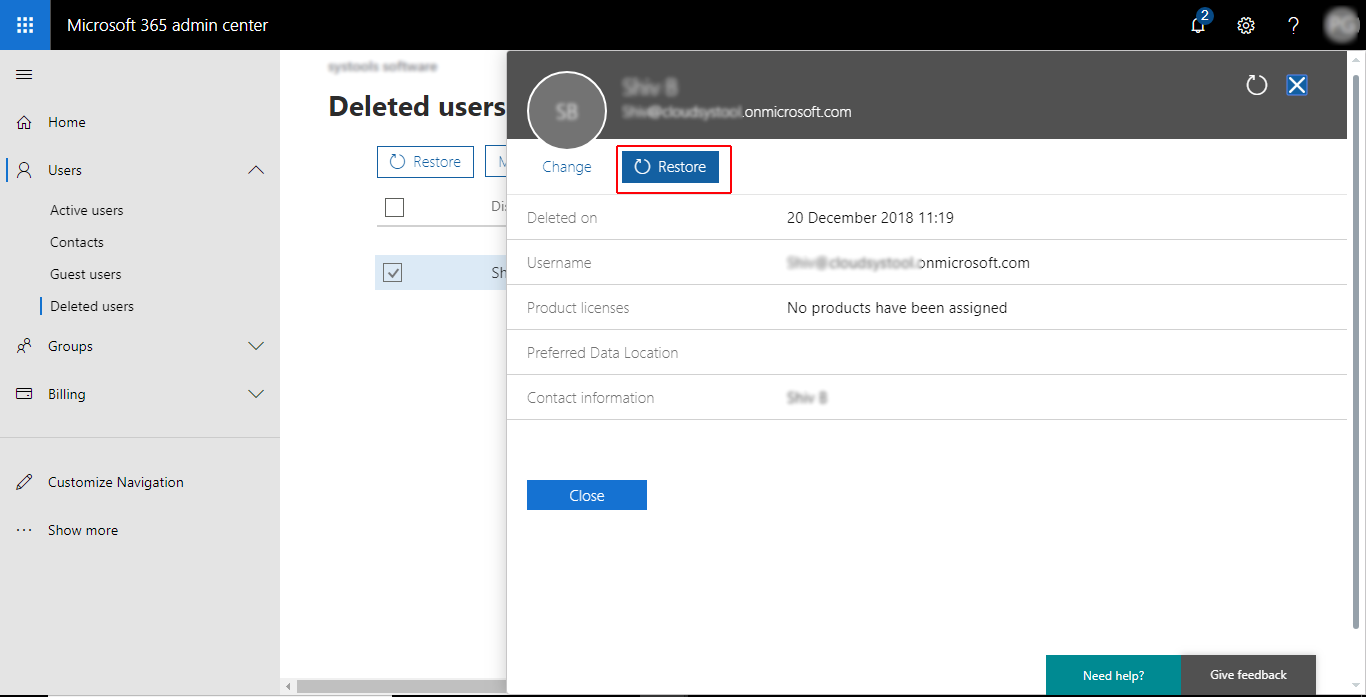
4: After this, just follow the prompts to check the password
Step 2. Convert Restored User Mailbox to Shared Mailbox Microsoft 365
- First of all, ensure a Microsoft 365 license is assigned for this and let the mailbox to be recreated.
- After this, just follow the instructions on the page to convert the user mailbox to a shared mailbox.
- Once it is done, you can delete the Microsoft 365 license from the user’s mailbox but do not delete the old mailbox of a user as the shared mailbox will use it as an anchor.
- Now, add desired members to the shared mailbox.
How to Convert Shared Mailbox to User Mailbox in Microsoft 365?
1: Go to the admin center and click on Admin centers >> Exchange.
2: Select Recipients and click on Shared.
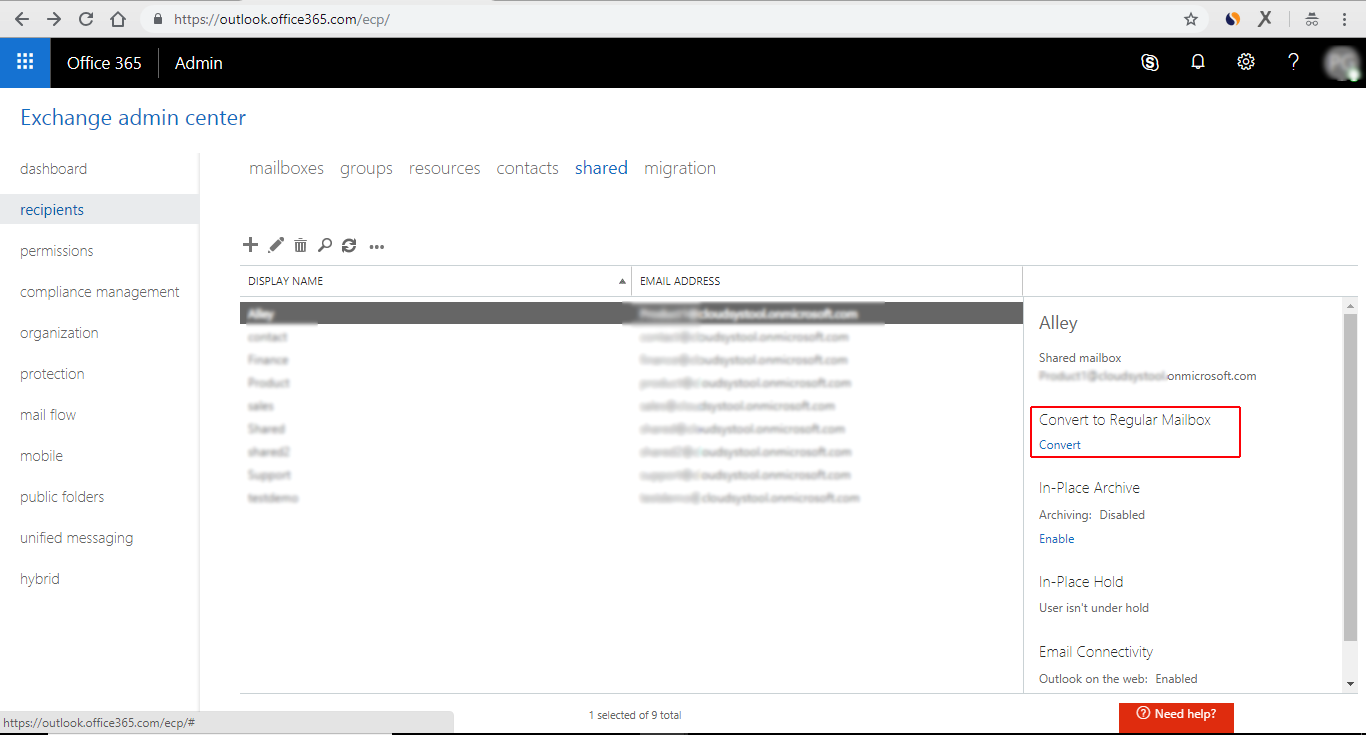
3: Highlight the shared mailbox you want to convert and click on Convert from Convert to Regular Mailbox (user mailbox).
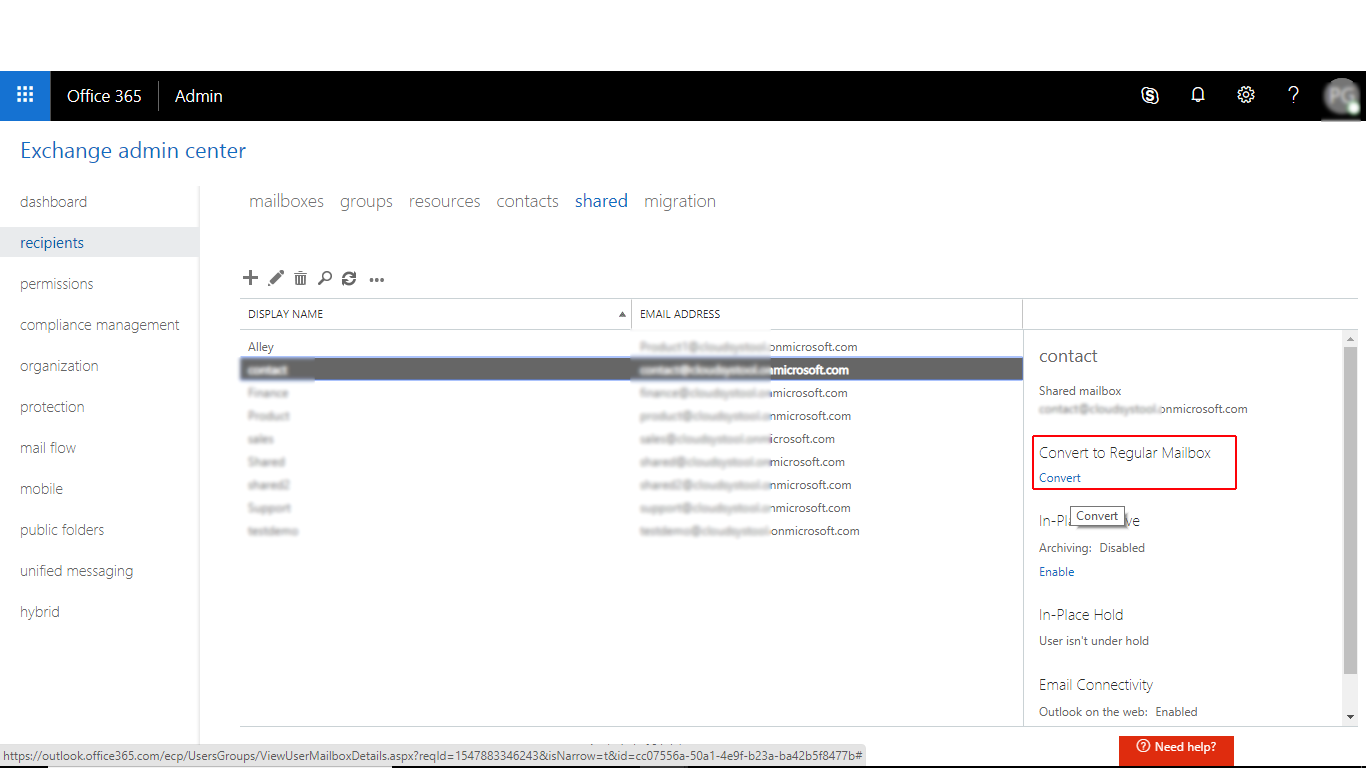
4: Navigate back to admin centers and select the user account that is associated with the old shared mailbox from Users. Next, assign a license to this account and reset its password.
The mailbox set up may take some time and then, a user can use the converted mailbox. After signing in, they can access the emails and calendars of the shared mailbox.
However, there are possibilities that you might need to migrate data from shared mailbox to user mailbox. In that case, you can use O365 to O365 migration tool, a tried and tested error-free utility.
What Happens When You Convert User Mailbox to Shared Mailbox?
The process to convert a user mailbox to a shared mailbox is smooth and risk-free. The calendar data, contacts and the original folder hierarchy are preserved and all the existing emails remain in place. The administrators can grant access to various members which allows a team to read and send messages from the same address without the need for different login IDs once the conversation is complete.
When to Convert Instead of Delete?
The decision to convert or delete a mailbox depends on your data needs and the cost strategies of the organization. If an employee has left the company but their data remains accessible for the current projects or if the rules require long-term data retention then you should choose to convert to a shared mailbox. This is an effective way to reduce the licensing costs because the shared mailboxes do not require a paid subscription.
On the other hand you should only delete a mailbox if there is no need for data retention, no legal hold is enabled and the organization has no requirements to fulfill.
Frequently Asked Questions
Q1. Do I need a license to start the conversion?
Ans. Yes you need a license because the mailbox must have an active Microsoft 365 license for you to start the conversation.
Q2. Does the shared mailbox need a license after conversion?
Ans. No it does not need a license unless the mailbox is larger than 50GB or you need to use features like an Archive mailbox or Litigation Hold.
Q3. Will I lose any data?
Ans. No, all the emails, folders and calendar events will stay where they were.
Q4. Can many people use it at once?
Ans. Yes many people can use it at once if you give them permission to read the messages and send replies from that address.
Q5. How long does it take?
Ans. It is very fast and takes less than 5 minutes, though the large mailboxes may take a little longer to finish.
Q6. Can I delete the old user account?
Ans. No you cannot delete the account as the mailbox will disappear too. You have to keep the user account because the shared mailbox needs to exist.
Let’s Sum Up
Converting a mailbox in Microsoft 365 is a simple and effective process if you follow the guidelines. It works best when the rules are respected, roles are assigned and all the settings are checked in advance. If you want to avoid any service interruptions then this conversion is important to keep the 50GB size limit.
Switching to a shared mailbox is a smart way for companies to save money while following data laws when dealing with employees leaving or changes in the team’s access. You should check the mailbox size and the data saving policies before you remove any active licenses.